Process
The Unseen 90%: Why Research is the Real Work
Published on
Start with the why. That’s cliché advice, but in my line of work, it’s the difference between a pretty video and a business asset.
People often ask me why I define myself as a Creative Strategist before a Director or Producer. It’s because the "Creative" part is just the execution. The "Strategy" is where the actual value is generated. And strategy is 90% research.
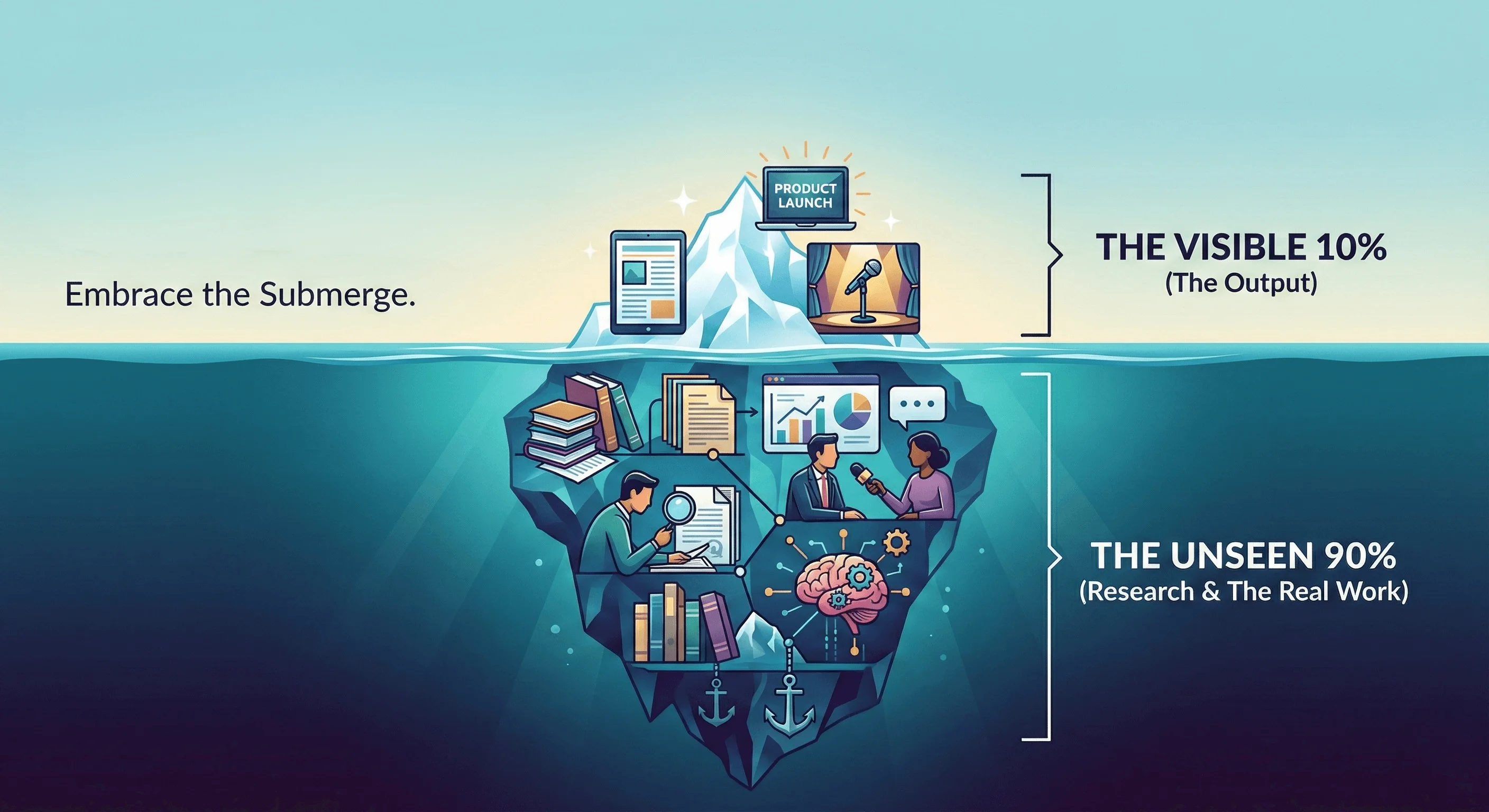
The Iceberg Illusion
When you watch a 30-second brand film, you’re seeing the tip of the iceberg. You’re seeing the lighting choices, the color grade, the actors, and the editing rhythm.
What you don’t see is the weeks I spent:
- Auditing the competitors: Not to copy them, but to find the "white space" they missed.
- Analyzing the audience: Reading YouTube comments, reddit threads, and customer reviews to understand their actual language, not marketing jargon.
- Deconstructing the product: I need to know how it fails just as much as how it works. You can’t tell an honest story if you don’t know the flaws.
Why I Write To Think
This blog exists because writing is part of that research process. You can’t fake understanding when you have to write it down.
Jeff Bezos famously banned PowerPoint at Amazon in favor of 6-page memos. His reasoning? Bullet points hide lazy thinking. Full sentences force you to connect the dots.
I apply the same logic to video production. Before we draw a single storyboard frame, I write.
- I write the Problem Statement.
- I write the Customer Persona.
- I write the Brand Manifesto.
If the writing isn't compelling, the video won't be either. You can't fix a broken story with a 4K camera.
Research as Respect
Ultimately, deep research is a form of respect.
It’s respect for the Client, who is trusting you with their budget. They don't need another "cool video"; they need a solution to a business problem. It’s respect for the Audience, who is trusting you with their time. If I’m going to ask for 60 seconds of your life, I better have something valuable to say.
The Visual Strategist's Toolkit
So, what does this research look like? It’s not just Google.
- Social Listening: What are people complaining about in your niche?
- Visual archeology: Looking at art history, cinema, and design trends to find visual metaphors that haven't been overused.
- Data Analysis: Looking at retention charts. Where do people drop off? Why?
The next time you see a piece of work from me, know that the camera was the last tool I picked up. The first tool was a question. When developing our investigative crime series—detailed in the Paper Leak OTT Case Study—that meant conducting extensive ground research and real interviews well before rolling a single frame.
Research is the work. Production is just the proof.
Continue exploring: Read about the art of visual storytelling to see how research translates into compelling narratives, explore the Paper Leak case study, or learn more about my process.
Need similar results for your brand?
Explore service-specific pages for video production, creative strategy, event content, and OTT documentary workflows.
Enjoyed this analysis?
Get concise briefings on creative technology, filmmaking, and production developments.
Read Next

Comments
Leave a comment
No comments yet. Be the first to share your thoughts!